
007 January post
Write and live with time and freedom, like Ian Fleming.

Happy New Year. I hope you have made some resolutions and have a time-honoured, time-honouring system for sticking to them. This book might help you.
Btw, it struck me while writing the below that I feel an increasing pressure to indicate / demonstrate that one’s writing has not been generated by AI. I’m working on this kind of thing too - AI in the Wild. Be in touch by replying to this or via LinkedIn if this interests you.
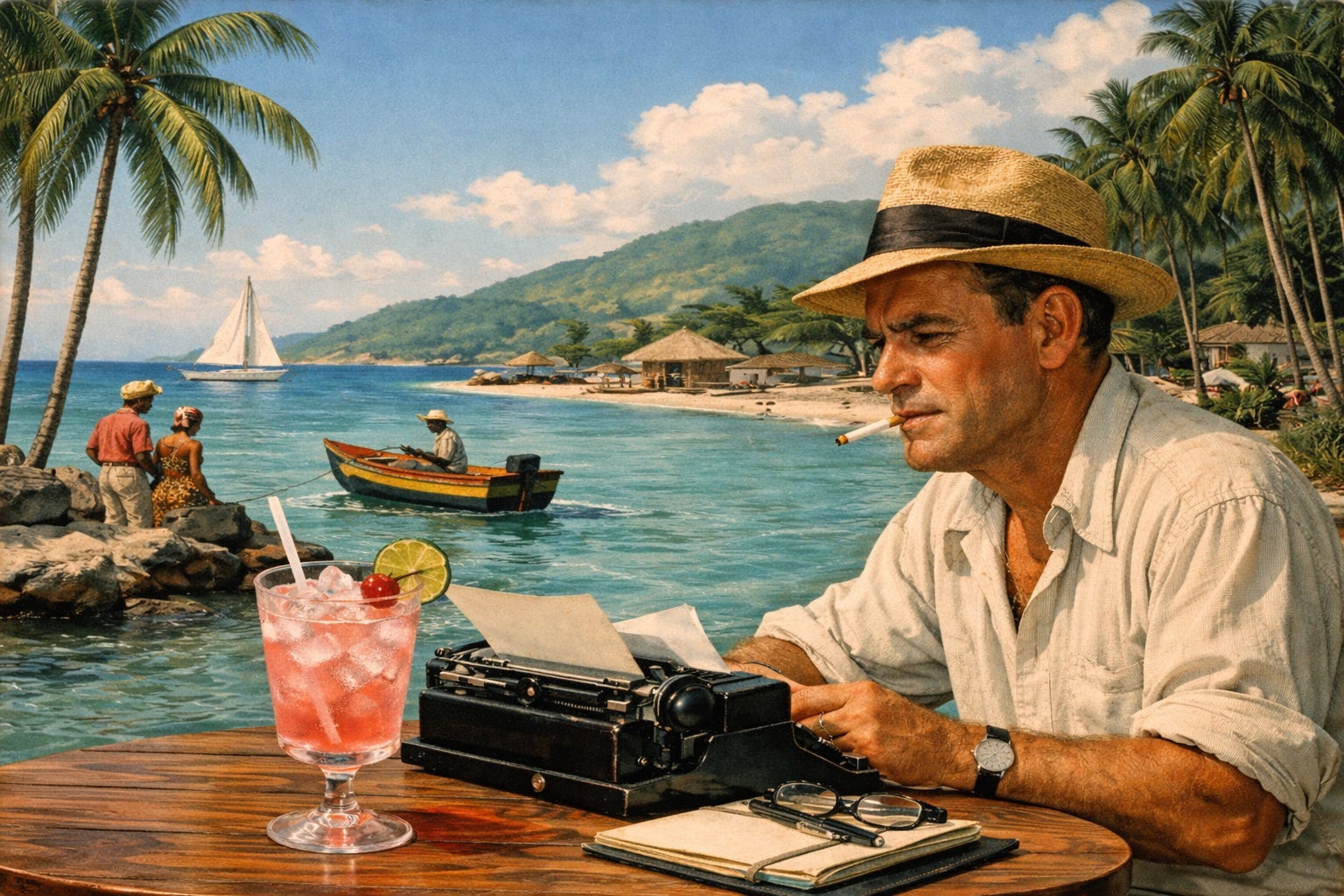
Ian Fleming, the creator of James Bond, used to timebox. From 1952, for twelve years straight, he would go to his beachhouse (called Goldeneye) in Jamaica and do this:
0730: Wake, with birds
0800: Swim, naked, in the sea
0900: Scrambled eggs
0930: Sunbathe
1000: 1,500 words
1215: Snorkel & spearfishing
1300: Jamaican lunch with pink gins
1430: Siesta
1600: Garden & swim
1800: 500 words
1900: Powerful drinks, dinner, Scrabble, then bed
This agenda has been inferred from his more poetic, whimsical piece below*.
Lovely life. Being awoken by the sounds of nature is a privilege too few of us enjoy. Ditto early morning exercise, entirely unencumbered, in the sea. He gets some well-earned protein and Vitamin D.
Then he writes 1,500 words in two-and-a-quarter hours. 11 words a minute. This sounds perfectly achievable. The specific, measurable output interesting and relevant to this blog. This is what needs to happen in these 135 minutes and he makes it so. That might mean he needs to speed up at certain points or that he might be able to slow down. But the goal needs to happen one way or another, in the designated time period. That is timeboxing, pure and simple. It’s quite possible to write a book in four months.
Then local lunch and light booze. And a siesta. I usually have a siesta here these days, living in Spain. I look forward to them and I get a second wind soon after I get up. Then he’s outside again getting some of the evening sun. Another writing timebox, this time at just eight words per minute. He ends the day with food, fun and harder booze.
These glimpses into how people spend their time are rare. They’re rare because they are private and intimate. That’s exactly why they are so important for us. These personal plans for how we should spend our time each day are windows onto our soul. Like a diary or even a to-do list. Precious and private.
How many people’s diaries or to-do lists or detailed, timeboxed agendas have you seen? Very few. The celebrated ones - Benjamin Franklin’s day, Johnny Cash’s to-do list, Anne Frank’s diary are famous partly (not wholly, of c) because they are so rare. Imagine that your to-do-list, agenda or diary were exposed to the world. How would you feel? Anxious, vulnerable. This is a good measure how vital they are to each of us.
So what of all this for you, practically. Three things:
Routine is important to scale the heights of your capability. That’s because you spend time on what’s important and it’s dedicated so you’re much more likely to get into a flow state. It’s not just me and Ian Fleming saying this. It’s the people mentioned in this article too, and many, many others.
You have more choice than you realise. I doubt you can live the life Fleming lived. But you can choose more than you are allowing yourself to, right now. You can imbue your days with a little more spice, imagination, magic. How will you do so?
You have more time than you realise. If you cut out what doesn’t matter. And if you hold a line against the Big Three Distractions.
Marc

ps. Sting wrote the song ‘Every breath you take’ on the same desk that Fleming used to write the Bond novels. Nice story until Sean Combs came along.
*I get up with the birds, which is to say about half past seven, because they wake one up, and then I go and bathe in the ocean before breakfast. We don’t have to wear a swimsuit there, because it’s so private; my wife and I bathe and swim a hundred yards or so and come back and have a marvelous proper breakfast with some splendid scrambled eggs made by my housekeeper, who’s particularly good at them, and then I sit out in the garden to get a sunburn until about ten.
Only then do I set to work. I sit in my bedroom and type about fifteen hundred words straightaway, without looking back on what I wrote the day before. Then about a quarter past twelve, I chuck that and go down, with a snorkel and spear, around the reefs looking for lobsters or whatever there may be, sometimes find them, sometimes don’t, and then I come back, I have a couple of pink gins, and we have a very good lunch, ordinary Jamaican food, and I have a siesta from about half-past two until four.
Then I sit again in the garden for about an hour or so, have another swim, and then I spend from six to seven – the dusk comes very suddenly in Jamaica; at six o’clock it suddenly gets very dark – doing another five hundred words. I then number the pages, of which by that time there are about seven, put them away in a folder, and have a couple of powerful drinks, then dinner, occasionally a game of Scrabble with my wife – at which she thinks she is very much better than I am, but I know I’m the best – and straight off to bed and into a dead sleep.”
Links
Timeboxing, the book (US)
Timeboxing, the book (UK)
Connect with me on LinkedIn